Bakuchiol Serum Benefits: The Complete Guide for Men

Bakuchiol is a plant compound that gives visible results similar to retinol's, with far less of the peeling, stinging and sun sensitivity that make men quit retinol. It comes from the seeds of the babchi plant, and the best head-to-head trial so far found it matched retinol on fine lines and uneven tone over 12 weeks.
This guide covers what bakuchiol is, what the research does and doesn't show, why it suits men's skin in particular, and how to use a bakuchiol serum.
Key Takeaways
- What it is: a plant-derived compound (a meroterpene phenol) from the seeds of Psoralea corylifolia, the babchi plant.
- What it does: helps with the look of fine lines, uneven tone, rough texture and loss of firmness.
- How it compares to retinol: similar visible results in the one head-to-head trial, with less scaling and stinging.
- Who it's for: men with sensitive or post-shave skin, beginners, and anyone who wants anti-aging support from a plant-based formula.
- How to use it: 4–6 drops on clean skin, once or twice a day, followed by moisturizer. Expect 8–12 weeks before judging results.
- The honest caveat: the evidence is promising but still small. Retinol has decades more research behind it.
What Is Bakuchiol?
Bakuchiol (pronounced buh-KOO-chee-ol) is a compound found mainly in the seeds of Psoralea corylifolia, a plant known as babchi. Babchi has been used in traditional Ayurvedic and Chinese medicine for centuries. Chemically, bakuchiol is a meroterpene phenol, and it has no structural resemblance to retinol or any other form of vitamin A.
That matters for two reasons:
- It isn't a retinoid. Bakuchiol reaches similar end results by a different route, which is why it doesn't bring retinol's usual side effects with it.
- Bakuchiol isn't the same as babchi oil. The raw seed also contains psoralens, compounds that make skin more sensitive to sunlight. Cosmetic bakuchiol is extracted and purified to remove them. Raw babchi oil sold for DIY skincare is a different product and shouldn't be used in its place.
How Does Bakuchiol Work?
Bakuchiol works as a functional analog of retinol: it doesn't look like retinol, but it prompts skin to respond in similar ways.
In a 2014 study in the International Journal of Cosmetic Science, researchers compared the genes that bakuchiol and retinol switch on in skin models. The two produced strikingly similar patterns of gene expression, including genes tied to collagen production and to the skin's structural proteins. Bakuchiol is also considered more stable in light and in formulas than retinol, which breaks down easily under both conditions.
In plain terms, bakuchiol tells skin to act more like younger skin. It supports renewal, collagen and firmness, the same things people use retinol for, without the same chemistry.
Bakuchiol Benefits for Skin
Here's what bakuchiol has been shown to help with, and how solid the evidence is for each.
- Fine lines and wrinkles. Both clinical studies below found measurable improvement after 12 weeks. This is the best-supported benefit.
- Uneven tone and dark spots. In the head-to-head trial, bakuchiol reduced hyperpigmentation about as well as retinol did.
- Firmness and elasticity. The 2014 clinical test reported significant improvement in both.
- Smoother texture. This follows from the renewal effect. Most users notice it before any change in lines.
- Tolerance. This is where bakuchiol clearly beats retinol. People in the trial using it reported less scaling and stinging, and they didn't need a slow "retinization" period to get there.

What the Research Says (and Doesn't)
Two clinical studies do most of the work behind bakuchiol's reputation.
The head-to-head trial (2019)
Researchers at UC Davis randomly assigned 44 adults to use either 0.5% bakuchiol or 0.5% retinol cream for 12 weeks, in a double-blind design. Both groups saw significant reductions in wrinkle surface area and hyperpigmentation, with no statistically significant difference between them. The retinol group reported more facial scaling and stinging.
The 2014 clinical test
In a 2014 study, 17 photo-aged adults applied a 0.5% bakuchiol formula twice daily for 12 weeks. By the end, testers saw significant improvement in lines and wrinkles, pigmentation, elasticity and firmness, without the side effects usually seen with retinol.
What this evidence doesn't tell you yet:
- The studies are small. Dozens of participants, not hundreds. Harvard Health calls bakuchiol "promising, but unproven" for exactly this reason.
- Men are under-represented. The 2014 test enrolled only women, and most skincare trials skew female.
- Twelve weeks is short. Retinoids have been studied for decades. Long-term data on bakuchiol doesn't exist yet.
Our Take
We think the fair summary is this: bakuchiol is the best-supported plant alternative to retinol available, and the early results are encouraging. If you already tolerate prescription retinoids well, there's no evidence-based reason to switch. If retinol has irritated you, or you've avoided it because of that, bakuchiol is worth a real 12-week trial.
Bakuchiol vs. Retinol, in Brief
The two target the same concerns, and bakuchiol is much easier on skin:
For the full side-by-side, including the decision guide and whether you can use both, read our bakuchiol vs. retinol comparison.
Why Bakuchiol Makes Sense for Men's Skin
Men's skin ages the same way women's does, but it lives under different conditions. Studies have shown that male skin is generally thicker and produces more sebum than female skin. Most men also shave several times a week, and every pass of the razor strips surface oils and leaves skin more reactive.
That combination is where retinol causes trouble. Retinol's early-stage flaking and stinging hit hardest on freshly shaved skin, and it's one of the most common reasons men quit a retinoid in the first few weeks. Bakuchiol's better tolerance means you can stay consistent, and consistency is what drives results with any anti-aging ingredient. If razor irritation is already a problem for you, pair your serum with the habits in our guide to preventing razor bumps.
Bakuchiol also suits the kind of routine most men will actually keep up: one serum, no nighttime-only rules, and no weeks of easing in.

Side Effects and Who Should Be Careful
Bakuchiol is well tolerated by most people, and the clinical trials reported fewer side effects than with retinol. Well tolerated isn't the same as risk-free, though:
- Allergic reactions are possible but rare. A handful of case reports describe allergic contact dermatitis from bakuchiol in cosmetic creams. Any botanical ingredient can do this.
- Patch test first. Apply a drop to your inner forearm or behind the ear once a day for a few days before using it on your face, especially if you have reactive skin or a history of reacting to fragrance or essential oils.
- Don't use raw babchi oil. As covered above, unpurified seed oil can contain photosensitizing psoralens.
- Stop if skin reacts. Persistent redness, itching or swelling isn't "purging." Stop using the product and talk to a dermatologist.
How to Use Bakuchiol Serum
A bakuchiol serum slots into a basic routine with no special rules. Here's how to use one:
- Cleanse. Start with a gentle face wash and pat skin dry.
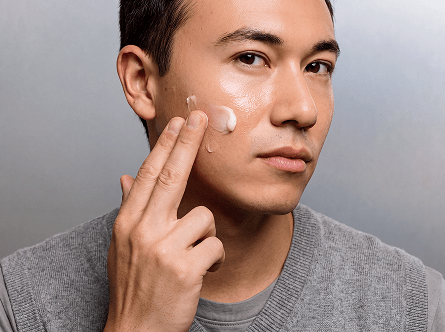
- Apply 4–6 drops. Warm them between your fingertips and press into your face and neck. After shaving, give your skin a minute to settle first.
- Let it absorb. About a minute is enough.
- Moisturize. Seal it in with a tallow face moisturizer, which helps support the barrier while the serum does its work.
- Use sunscreen during the day. Bakuchiol doesn't increase sun sensitivity, but UV exposure is the leading cause of the lines and spots you're treating.
Once or twice a day?
Either works. The clinical studies used twice-daily application, so morning and night gives you the closest match to the research. Once a day is still a meaningful routine.
When will you see results?
Most men notice smoother texture within a few weeks. Changes in fine lines and tone take longer, and the studies measured results at 12 weeks. Give it a full three months before you decide.
For a complete daily routine built around a serum, see the simple skincare routine for men that actually works, or our skincare routine for men in their 30s if you're starting prevention early.
What to Look for in a Bakuchiol Serum
Not every product with "bakuchiol" on the front delivers the same thing. Check the label for:
Label Checklist
- Bakuchiol listed by name. "Babchi extract" or "Psoralea corylifolia seed oil" isn't the same as purified bakuchiol.
- A clinically relevant amount. Both studies used 0.5%. Brands that publish their concentration make it easier to compare.
- A supportive base. Bakuchiol dissolves in oil, so a good serum pairs it with nourishing plant oils rather than fillers.
- Short, readable ingredients. Anti-aging results come from consistent use, and a formula your skin tolerates well is one you'll keep using.
For more on the plant oils and fats that work well alongside bakuchiol, see our guide to the best natural skincare ingredients for men.
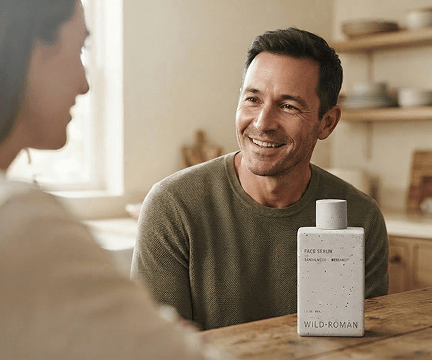
Wild Roman Face Serum: Our Bakuchiol Formula
We built our bakuchiol face serum around the approach this guide describes: bakuchiol in a base of cold-pressed, antioxidant-rich plant oils, with nothing synthetic added.
Full Ingredients
Organic Sunflower Seed Oil, Organic Pumpkin Seed Oil, Passion Fruit Seed Oil, Cherry Seed Oil, Rosehip Oil, Sea Buckthorn Berry Oil, Camellia Oil, Non-GMO Vitamin E, Bakuchiol, Essential Oils of Bergamot, Lavender and Sandalwood.
What the supporting oils add:
- Sea buckthorn berry oil is naturally rich in carotenoids and fatty acids, and it's valued for brightening dull skin.
- Rosehip oil is a classic choice for uneven tone and texture.
- Pumpkin seed oil brings essential fatty acids and vitamin E for conditioning.
- Camellia, cherry seed and passion fruit seed oils are lightweight oils that absorb without leaving skin greasy.
The scent comes from named essential oils (bergamot, lavender and sandalwood), not synthetic fragrance. If you're sensitive to essential oils, patch test first.
Use it as the middle step of our Face Routine, between the Face Wash and the Face Moisturizer. For other plant-based options, read the best anti-aging skincare for men without retinol.

Frequently Asked Questions
What should you not use with bakuchiol?
Bakuchiol has no known dangerous ingredient interactions, but stacking it with several strong actives at once can irritate skin. When you first start, avoid layering it in the same routine with retinoids, exfoliating acids like glycolic or salicylic acid, or benzoyl peroxide. Add one new active at a time, and give each a few weeks before adding another.
Can I put bakuchiol directly on my face?
A bakuchiol serum is made to go directly on clean facial skin, and that's how the clinical studies applied it. Pure bakuchiol powder or raw babchi oil shouldn't go on your face undiluted, though. Use a finished product that lists bakuchiol at a set concentration, and patch test it on your forearm for a few days first.
Can you use bakuchiol every day?
Bakuchiol can be used every day, and daily use is how it was tested. Both major clinical studies had participants apply it twice a day, morning and night, for 12 weeks. Unlike retinol, bakuchiol doesn't need a slow build-up of a few nights a week, and it isn't limited to evening use.
Can you use bakuchiol in the morning?
Bakuchiol can be used in the morning because, unlike retinol, it isn't known to increase sun sensitivity. Apply it after cleansing and before moisturizer, then finish with sunscreen. Daily sunscreen still matters, because UV exposure is the main driver of the fine lines and dark spots bakuchiol is meant to improve.
How long does bakuchiol take to work?
Bakuchiol usually takes 8 to 12 weeks of consistent use to show visible changes in fine lines and skin tone. Both key clinical studies measured results at 12 weeks. Many people notice smoother texture sooner, often within the first month, but three months is the fair window for judging whether it's working.
Is bakuchiol safe to use after shaving?
Bakuchiol is generally well tolerated on freshly shaved skin, which is a major advantage over retinol for men. Wait a minute or two after shaving for any stinging to settle, then apply the serum as usual. If you're prone to razor burn, follow with a rich moisturizer and skip exfoliating acids on shave days.
Does bakuchiol cause purging?
Bakuchiol isn't known to cause the purging phase that often comes with starting retinol, because it doesn't produce the same aggressive early turnover. Redness, itching or breakouts that last more than a few days after starting bakuchiol are more likely an irritation or a reaction to something in the formula. Stop using it and patch test.
Is bakuchiol good for men?
Bakuchiol is a strong fit for men because it targets fine lines and uneven tone without the flaking and stinging that make retinol hard to use on shaved skin. It also works with a simple routine: no nighttime-only rule and no adjustment period. Men with thicker, oilier skin can pair it with a lightweight moisturizer.
This article is for general information and isn't medical advice. If you have a skin condition or a reaction to any product, see a board-certified dermatologist.